


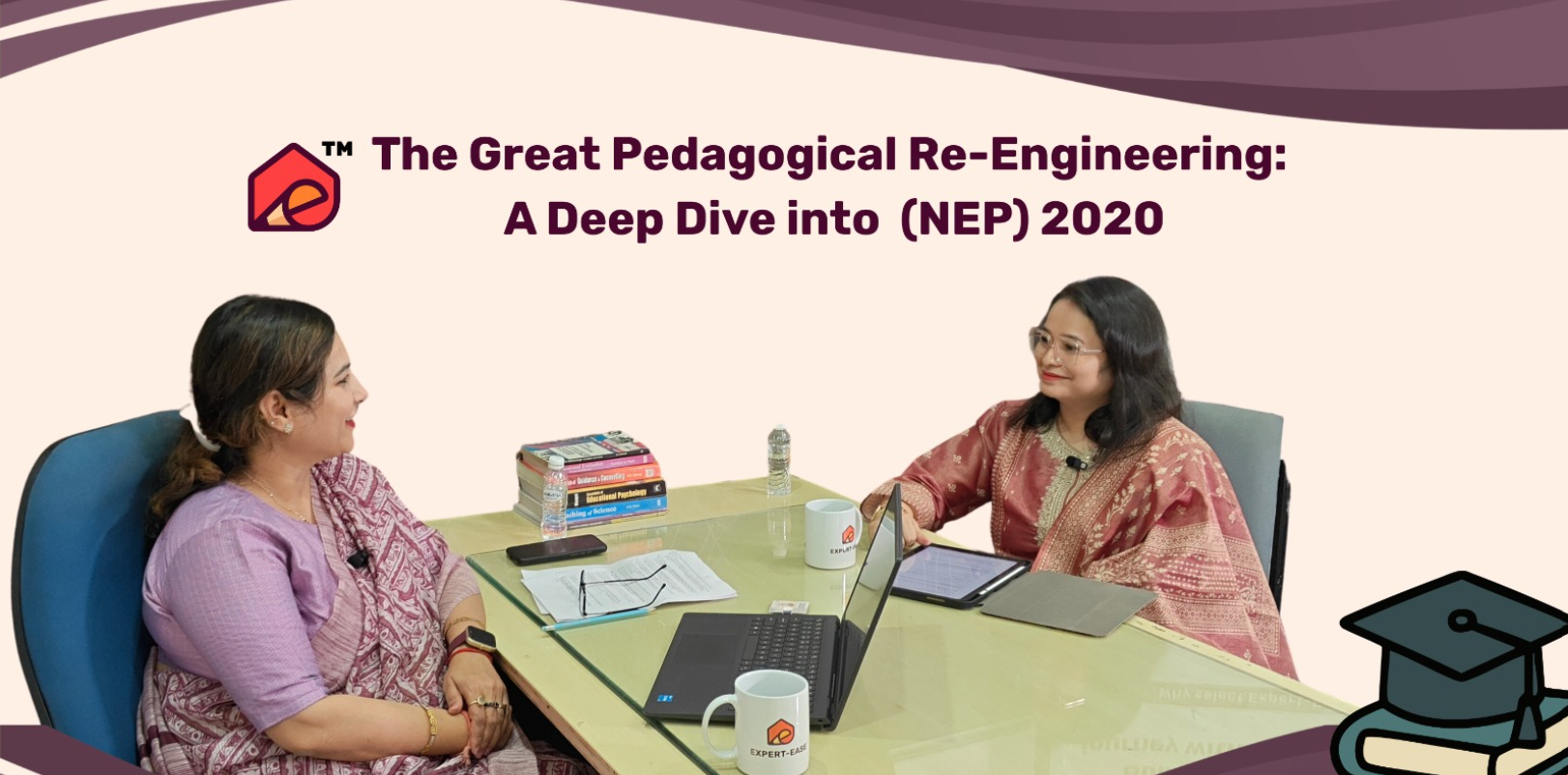
The global landscape of education is undergoing a massive shift. Driven by the rapid rise of artificial intelligence, an unpredictable job market, and a much-needed focus on mental well-being, our traditional school systems are being forced to change. At the absolute centre of this structural shift stands the National Education Policy 2020. This groundbreaking policy introduces historic education reforms in India to establish a truly modern education system in India that prepares students for the future. By prioritising a student-centred learning environment, it encourages schools to adopt creative learning methods and interactive, activity-based learning over old rote memorisation habits.
Furthermore, this updated framework introduces major changes under NEP 2020 for teachers, making continuous professional development for teachers a central part of their careers. It also integrates technology in teacher education to prepare educators for digital challenges while creating thousands of flexible teaching jobs across the country. As a result, choosing teaching as a career in India has become a highly dynamic and rewarding choice. Classrooms under this vision focus heavily on experiential learning in education, balancing technology with healthy, tactile, screen-free learning for younger minds to ensure completely personalised learning for students of all ages.
If you want to see the Podcast.Tap on this link: Podcast Link
1. Architectural Redesign: The New 5+3+3+4 Model
For decades, schooling in India was defined by a rigid 10+2 framework. This old system completely ignored early childhood development and forced an arbitrary split between secondary education and higher secondary specialization. The new directive replaces this with a developmentally aligned 5+3+3+4 structure covering ages 3 to 18.
+-------------------------------------------------------------------------+
|                        OLD STRUCTURE (10 + 2)                           |
|  [ Ages 6 - 16: Grades 1-10 ]  --->  [ Ages 16 - 18: Grades 11-12 ]     |
+-------------------------------------------------------------------------+
                          VS
+-------------------------------------------------------------------------+
|                        NEW STRUCTURE (5 + 3 + 3 + 4)                    |
|  [ Foundational: 5 Yrs ] -> [ Preparatory: 3 Yrs ] -> [ Middle: 3 Yrs ]  |
|  (Ages 3-8 | Nursery-Gr 2)  (Ages 8-11 | Gr 3-5)      (Ages 11-14 | Gr 6-8) |
|                                                                         |
|                         ---> [ Secondary: 4 Yrs ]                       |
|                              (Ages 14-18 | Gr 9-12)                     |
+-------------------------------------------------------------------------+
- The Foundational Stage (5 Years | Ages 3–8): This stage integrates three years of play-based pre-school education (via Anganwadis or pre-schools) with Grades 1 and 2. By formalizing early education, the policy brings millions of socio-economically disadvantaged children into the learning fold early, using a curriculum free of formal textbooks and exams.
- The Preparatory Stage (3 Years | Ages 8–11): Spanning Grades 3 to 5, this phase introduces text-based learning while keeping things highly interactive. The focus shifts toward building core habits in reading, writing, and basic mathematics.
- The Middle Stage (3 Years | Ages 11–14): Covering Grades 6 to 8, this stage marks the introduction of subject-oriented academic disciplines. Students begin interacting with abstract concepts in sciences, math, humanities, and arts through hands-on, cross-domain learning.
- The Secondary Stage (4 Years | Ages 14–18): Encompassing Grades 9 to 12, this is a unified four-year block designed to build critical thinking and student agency. The most significant change here is the abolition of hard academic streams. The old barriers separating Science, Arts, and Commerce are gone. A student can freely combine Physics with Political Science, or Chemistry with Fashion Design, based entirely on their personal interests.
2. Early Childhood Care & Education (ECCE) and Foundational Literacy
The integration of ECCE into formal schooling is one of the policy's most progressive steps. Neuroscience shows that over 85% of a child's brain development happens before the age of six. Missing this window creates learning gaps that are incredibly tough to close later in life.
To make this work, the government is executing a multi-ministerial effort across the Ministries of Education, Women and Child Development, Health, and Tribal Affairs. The core focus is on upgrading the existing Anganwadi system—providing these local hubs with updated learning tools, structural safety renovations, and specialized training for workers.
Simultaneously, the policy targets a critical issue: millions of primary school students who struggle with basic reading and math. To fix this, the government launched the NIPUN Bharat Mission (National Initiative for Proficiency in Reading with Understanding and Numeracy).
                   NIPUN BHARAT MISSION OBJECTIVES

  +---------------------------------------------------------------+
  | Foundational Literacy & Numeracy (FLN) by Grade 3 Target      |
  +---------------------------------------------------------------+
                        |
        +-------------------------+-------------------------+
        |                                                   |
        v                                                   v
[ Oral Language & Comprehension ]                  [ Mathematical Fluency ]
Read with comprehension at minimum                 Perform basic addition, subtraction,
45-60 words per minute by Grade 3.                 and division operations accurately.
The mission sets a clear target: every single child must attain Foundational Literacy and Numeracy (FLN) by the end of Grade 3, shifting primary classrooms away from mechanical copying toward genuine comprehension.
3. Shifting Assessments from Rote Learning to Mastery
For generations, the classroom experience has been trapped in a high-stakes assessment culture that rewards memorization over real understanding. The new blueprint aims to replace this with continuous, formative, and competency-based evaluation.
The centrepiece of this change is the redesign of the Grades 10 and 12 Board Examinations. Under the new rules, board exams test core concepts, critical thinking, and real-world application rather than months of memorization. To reduce student anxiety and curb the toxic "coaching culture," the policy introduces unprecedented flexibility:
- Students can take Board Exams on up to two occasions in an academic year—one main exam and one optional attempt to improve their score.
- The exams are modularized, separating clear conceptual testing from long-form essay writing.
Traditional, marks-focused report cards are also being replaced by a 360-Degree Holistic Progress Card. This multi-dimensional card tracks a student's progress across cognitive, socio-emotional, and physical domains using a blended evaluation model:
                    360-DEGREE HOLISTIC PROGRESS CARD

   +-----------------------------------------------+
   |              COGNITIVE DOMAIN                 |
   | Conceptual understanding & critical thinking  |
   +-----------------------------------------------+
                           ^
                           |
                           v
+-------------------------------+           +-------------------------------+
|     SOCIO-EMOTIONAL DOMAIN    | <-------> |       PSYCHOMOTOR DOMAIN      |
| Collaboration, empathy, and   |           | Technical skills, physical    |
| leadership via peer reviews   |           | dexterity, and arts execution |
+-------------------------------+           +-------------------------------+
To keep these standards consistent across the country, the government established PARAKH (Performance Assessment, Review, and Analysis of Knowledge for Holistic Development). Operating as a national assessment center, PARAKH sets norms and guidelines for student evaluation, ensuring fairness across different state and central school boards.
4. Higher Education: Multidisciplinary and Flexible
The higher education system is undergoing a major reorganization. The ultimate goal is to push the Gross Enrolment Ratio (GER) in higher and vocational education to 50% by 2035.
To do this, the policy introduces a flexible, four-year undergraduate program (FYUP) featuring a Multiple Entry and Exit System (MEES). This framework ensures that students are credited for the time they spend in college, effectively removing the penalty of dropping out:
| Year Completed | Exit Certification Awarded | Operational Utility |
|---|---|---|
| Year 1 | Undergraduate Certificate | Validates basic domain exposure; great for quick vocational shifts. |
| Year 2 | Undergraduate Diploma | Certifies intermediate technical or conceptual skills. |
| Year 3 | Bachelor's Degree | The standard degree path required for general professional employment. |
| Year 4 | Bachelor's Degree with Research | Advanced path including a research project; grants direct entry to Ph.D. programs. |
This fluid model is powered by the Academic Bank of Credits (ABC). The ABC acts as a secure digital locker that stores the academic credits a student earns. If a student needs to take a break from their studies, their credits remain safe, allowing them to resume their education later at a completely different institution without starting over.
On the regulatory side, the policy simplifies the confusing maze of bodies like the UGC and AICTE by setting up a single umbrella organization: the Higher Education Commission of India (HECI). The HECI operates through four distinct verticals:
                 HIGHER EDUCATION COMMISSION OF INDIA (HECI)

    +-------------------------------------------------------------------+
    | NHERC (National Higher Education Regulatory Council)             |
    | Single-point regulator for general higher education (excl. Law/Med)|
    +-------------------------------------------------------------------+
                           |
        +----------------------------+----------------------------+
        |                            |                            |
        v                            v                            v
 [ NAC ]                      [ HEGC ]                     [ GEC ]
 National Accreditation       Higher Education             General Education
 Council: Governance and      Grants Council:              Council: Standard setting
 graded operational autonomy. Funding and budgeting.       and academic benchmarks.
To build a stronger research culture, the policy mandates the creation of the National Research Foundation (NRF). Modeled after successful international bodies like the National Science Foundation (NSF) in the US, the NRF is built to seed, fund, and mentor high-impact research projects across universities, bridging the historical gap between teaching and active innovation.
5. Transforming Teacher Education: The Core Catalyst
No educational reform can succeed without completely changing how we train, recruit, and support our educators. Historically, teacher education in India has been disconnected from real classroom dynamics. The landmark Justice J. S. Verma Commission Report (2012) pointed out that too many training institutes had become commercialized "degree-granting shops" operating with weak practical training and poor mentoring.
Addressing these precise issues requires a structural shift to ensure that candidates are fully supported. The policy directly answers this by mandating that by 2030, the minimum qualification for a schoolteacher will be a 4-year integrated B.Ed. degree. This program combines deep subject knowledge with practical pedagogical training, moving teacher preparation out of isolated institutes and into multidisciplinary university settings.
The Dynamics of Professional Identity Formation
This change directly addresses how an educator's identity is built. As explored by researchers Beijaard, Meijer, and Verloop (2004) in Reconsidering research on teachers' professional identity, an educator's voice isn't something you get from reading a textbook. It's a dynamic concept shaped by real classroom experience, continuous self-reflection, and professional mentorship.
The old, short-term models forced candidates to study theory without giving them the time to actually live the role. The 4-year integrated model fixes this by embedding long-term, continuous classroom internships directly into the degree.
Theoretical Anchors: Moving from Instructor to Facilitator
This immersive framework shifts the teacher's role from an autocratic keeper of information to a supportive guide. This idea is deeply rooted in Social Constructivism, pioneered by psychologist Lev Vygotsky. Vygotsky's work shows that optimal learning happens within the Zone of Proximal Development (ZPD)—the space where a student can master a concept with right-sized guidance rather than struggling alone.
                     VYGOTSKY'S ZONE OF PROXIMAL DEVELOPMENT

       +------------------------------------------------------------+
       |  Current Knowledge: What the learner can do unaided.       |
       |                                                            |
       |     +------------------------------------------------+     |
       |     |  ZONE OF PROXIMAL DEVELOPMENT (ZPD)            |     |
       |     |  What the learner can do with expert guidance. |     |
       |     |  *NEP 2020 Focus: Teacher as Facilitator*      |     |
       |     +------------------------------------------------+     |
       +------------------------------------------------------------+
By redesigning teacher education around constructivist principles, the policy trains educators to create active, inquiry-driven learning environments where knowledge is co-created with students.
Practical Methodology: The Power of Reflective Journaling
To turn these theories into everyday habits, modern teacher training relies heavily on Reflective Journaling. This practice, widely used in advanced systems like those in the UK, Canada, and Australia, requires teachers to systematically record and analyze their daily classroom outcomes, student reactions, and areas for improvement.
As highlighted in global research on Reflective Journaling in Teacher Education, regular reflection transforms teaching from an unexamined routine into an evidence-based practice, building critical self-awareness in educators.
Building Teacher Self-Efficacy
This continuous cycle of practice, reflection, and adaptation builds a teacher's Self-Efficacy—a psychological concept pioneered by Albert Bandura. Bandura defines self-efficacy as a person's belief in their own ability to execute the actions needed to achieve specific performance goals.
Studies found on Google Scholar on Albert Bandura's Teacher Self-Efficacy consistently reveal that teachers with high self-efficacy are far more resilient, more open to classroom innovation, manage classrooms better, and directly drive higher student achievement. The early clinical exposure of the integrated B.Ed. model helps build this professional confidence from the start.
               BANDURA'S TEACHER SELF-EFFICACY LOOP

  +-----------------------------------------------------------+
  |  Early Clinical Immersion & Reflective Practicums        |
  +-----------------------------------------------------------+
                      |
                      v
  +-----------------------------------------------------------+
  |  Elevated Teacher Self-Efficacy (Internalized Confidence)  |
  +-----------------------------------------------------------+
                      |
        +-----------------------+-----------------------+
        |                                               |
        v                                               v
[ High Instructional Resilience ]              [ Classroom Innovation ]
Persistent support for struggling              Adoption of new pedagogies
students and adaptive strategies.              and EdTech integration.
To support educators throughout their careers, the policy introduces a mandatory 50 hours of Continuous Professional Development (CPD) per year. This training is delivered through platforms like NISHTHA (National Initiative for School Heads' and Teachers' Holistic Advancement), keeping teachers up to date on modern tools and pedagogical shifts.
6. Language and Multilingualism
Language policy under the new framework balances cognitive science with cultural preservation. The policy states that wherever possible, the medium of instruction until at least Grade 5, and preferably until Grade 8, should be the mother tongue, local language, or regional language.
This directive is backed by a large body of global psycholinguistic research. Cognitive development studies show that teaching young children abstract concepts in a foreign language creates a double cognitive load: the child has to struggle with the new language while simultaneously trying to grasp the actual lesson. Teaching in the primary home language removes this barrier, letting cognitive networks form naturally.
Crucially, this is implemented without being anti-English. It uses a flexible Three-Language Formula designed to support national integration while respecting regional autonomy:
- At least two of the three languages taught must be native to India.
- The choice of languages remains entirely with state governments, local institutions, and the students themselves.
- Sanskrit will be offered as an option at all levels of school and college, while other classical and modern foreign languages are actively encouraged at the secondary level.
7. Technology, the Digital Divide, and AI in Classrooms
The roadmap introduces a clear digital path forward, recognizing that modern educational equity requires a strong tech foundation. It creates the National Educational Technology Forum (NETF), an autonomous body designed to guide institutions on using software, optimizing learning platforms, and directing infrastructure investments.
A major pillar of this ecosystem is the scaling up of national open-education platforms like DIKSHA (Digital Infrastructure for Knowledge Sharing). DIKSHA provides high-quality, curriculum-aligned learning materials, interactive textbooks, and professional development modules to millions of teachers and students across the country.
Addressing the Digital Divide
However, deploying tech across a vast and diverse country presents major challenges. As documented in global reports by UNESCO and digital access studies by UNICEF, the Digital Divide remains a stark reality. Millions of students in rural areas and socio-economically disadvantaged groups (SEDGs) face deep structural barriers:
                     THE DIGITAL DIVIDE TRIAD

      +-------------------------------+
      |  INFRASTRUCTURAL DEFICIT      |
      |  Unstable grid connectivity   |
      |  & zero high-speed broadband  |
      +-------------------------------+
                      ^
                      |
                      v
+-------------------------------+           +-------------------------------+
|     HARDWARE ACCESSIBILITY    | <-------> |       DIGITAL LITERACY        |
| Extreme lack of smart devices |           | Severe deficits in tech       |
| per household unit            |           | fluency among educators       |
+-------------------------------+           +-------------------------------+
If digital tools are rolled out uniformly without targeted infrastructure funding, technological reforms risk widening the gap between wealthy urban centers and under-resourced rural schools.
The Integration of Artificial Intelligence (AI)
Compounding this challenge is the rapid arrival of Artificial Intelligence (AI) in education. As outlined in UNESCO's Strategy Paper on AI and Education and their Guidance for Generative AI in Education and Research, AI tools are changing how classrooms function.
                         AI IN THE CLASSROOM

   +-----------------------------------------------------------+
   |  Automated Lesson Planning & Dynamic Analytics            |
   +-----------------------------------------------------------+
                      |
        +-----------------------+-----------------------+
        |                                               |
        v                                               v
[ Hyper-Personalized Pathways ]                 [ Intelligent Diagnostics ]
Customized, adaptive real-time                  Instant formatting assessments
content delivery per student.                   and predictive metric tracking.
This rapid shift makes comprehensive training an immediate requirement. Under the new policy, educators must be trained not just to use software, but to responsibly manage AI-driven learning tools, analyze student data, and handle issues like algorithmic bias and academic integrity.
8. Vocational Integration and Economic Employability
A long-standing weakness of the old schooling system has been the sharp divide between academic tracks and vocational training. This division has stigmatized manual skills and left many graduates academically qualified but structurally unemployable. The policy aims to change this: by 2025, at least 50% of learners across the school and higher education systems will have exposure to vocational education.
To achieve this, the policy integrates vocational training into the mainstream curriculum starting in Grade 6. Every student undergoes a mandatory 10-day bagless period to intern with local trade experts, artisans, and businesses—gaining hands-on exposure to fields like pottery, carpentry, electrical work, robotics, graphic design, and coding.
This early exposure aligns directly with global skills data published by the World Economic Forum (WEF). The WEF Future of Jobs Report 2025 emphasizes that modern employers are shifting toward capability-focused frameworks. The global market increasingly prioritizes:
- Complex problem-solving and analytical reasoning.
- Cross-domain adaptability and technological fluency.
- Emotional intelligence and collaborative leadership.
- Strong communication and community interface.
By embedding vocational competencies early, the policy aims to dismantle the old stigma associated with manual arts, building a skilled, adaptable workforce prepared for the modern economy.
9. Mental Health and Emotional Well-being
A groundbreaking feature of the framework is its explicit recognition of the link between a student's emotional state and their ability to learn. True education cannot happen in an environment dominated by chronic stress and fear of failure.
The policy mandates professional counseling systems across all schools and colleges. It leverages national mental health initiatives like MANODARPAN—a support platform launched by the Ministry of Education to provide psychological counseling, emotional guidance, and stress-reduction resources to students, parents, and educators.
                  HOLISTIC STUDENT WELL-BEING UNDER NEP 2020

    +---------------------------------------------------------------+
    |  MANODARPAN: Multi-Channel Psychological Support Networks     |
    +---------------------------------------------------------------+
                          |
        +---------------------------+---------------------------+
        |                                                       |
        v                                                       v
[ Structural Stress Reduction ]                 [ Institutional Counselling ]
Elimination of hyper-competitive,               Accessible on-campus mental
health systems and counsellors.               health systems and counsellors.
Crucially, this framework also addresses teacher burnout. As detailed in the World Health Organization (WHO) Burnout Classification, burnout is formally recognized as an occupational phenomenon resulting from chronic, unmanaged workplace stress.
In its global analysis of Mental Health and Education Foundations, the WHO points out that educators face intense emotional pressure and heavy administrative loads. The policy acknowledges that a stressed, exhausted teacher cannot maintain an empathetic classroom. It outlines systemic changes to protect teacher well-being, including transparent merit-based transfers, the reduction of excessive non-teaching administrative work, and dedicated wellness programs for school staff.
10. Inclusion, Equity, and the Gender Inclusion Fund
True educational excellence is impossible if large segments of the population remain excluded due to historical or socio-economic disadvantages. The policy introduces a targeted approach by grouping vulnerable demographics under a single category: Socio-Economically Disadvantaged Groups (SEDGs). This includes:
- Gender identities (specifically focusing on girls and transgender individuals).
- Socio-cultural identities (Scheduled Castes, Scheduled Tribes, OBCs, and minorities).
- Geographical identities (students from small villages, remote areas, and aspirational districts).
- Disabilities (including learning and physical challenges).
The primary tool for this initiative is the creation of a dedicated Gender Inclusion Fund (GIF). The GIF provides targeted funding to states to execute scalable initiatives that ensure safe, equitable education for all female and transgender students—such as building clean sanitation facilities, providing secure transport networks, and offering targeted merit scholarships.
Simultaneously, the policy establishes Special Education Zones (SEZs) in regions with high concentrations of SEDGs. In these zones, central and state governments deploy additional educational resources, achieve better teacher-to-student ratios, and set up modern digital learning infrastructure, helping bridge historical divides.
11. Cross-Border Matrix: India vs. Finland Teacher Training
To evaluate the potential impact of these teacher reforms, it is highly useful to look at global benchmarks. The Organisation for Economic Co-operation and Development (OECD) consistently ranks Finland as having one of the world's most successful public education systems.
A quick comparative analysis highlights how India's new policy attempts to align with these validated international models:
| Comparative Dynamic | The Finnish Educational Framework | The India NEP 2020 Directive |
|---|---|---|
| Minimum Academic Credential | Mandatory Master's Degree in Education (fully research-based and state-funded). | 4-Year Integrated B.Ed. Degree (merging subject specialization with pedagogy). |
| Research Integration | Every teacher completes an original research dissertation on practical classroom dynamics. | NRF and integrated B.Ed. programs design educators to be active, research-driven innovators. |
| Clinical Classroom Exposure | Immersive teacher training schools are embedded directly into major universities from day one. | Systematic eradication of isolated training institutes in favor of multi-disciplinary universities. |
| Professional Status | Highly competitive; teaching matches the social status of medicine and law. | Standardizing selection via rigorous National Testing Agency (NTA) exams and transparent hiring. |
12. The Horizon of New Career Pathways
As the country digitizes its learning infrastructure, it is opening up dynamic new career paths outside traditional classroom settings. This shift has accelerated the rise of diverse instructional pathways across the nation.
Supported by the rapid growth of large-scale Indian digital learning ecosystems like Unacademy and other leading platforms analyzed in reports by the India Brand Equity Foundation (IBEF), educators are no longer confined to local school buildings. The modern educational market offers diverse opportunities for enterprising instructors:
                THE MODERN TEACHER ENTREPRENEUR

    +----------------------------------------------------------+
    |  Global Micro-Tutoring & Independent Digital Brands      |
    +----------------------------------------------------------+
                       |
        +------------------------+------------------------+
        |                                                 |
        v                                                 v
[ Freelance Instructional Design ]               [ Professional Mentoring ]
Creating specialized curricula, assessment      Providing personalized analytics
modules, and multimedia resources.               and career coaching services.
This structural shift transforms education from a fixed, institutional position into a highly scalable landscape where an educator's reach and professional impact are determined by their digital fluency and subject mastery.
13. Governance, Implementation, and the 6% GDP Challenge
The ultimate success of the blueprint depends on its financial execution and administrative coordination across India's federal structure. Because education is a concurrent list subject under the Indian Constitution, both the Central Government and individual State Governments share legislative and operational responsibility.
To ensure smooth coordination, the policy proposes the creation of the Rashtriya Shiksha Aayog (National Education Commission). Chaired directly by the Prime Minister, this high-level body brings together education ministers, leading scientists, and academic minds to ensure unified, long-term policy execution.
At the local level, the policy addresses the issue of small, isolated schools that lack adequate resources by grouping them into School Complexes/Clusters. Within these clusters, multiple primary and secondary schools share vital infrastructure—including advanced science labs, digital learning tools, sports facilities, and specialized teachers for arts and vocational subjects.
                    SCHOOL COMPLEX RESOURCE SHARING

         +------------------------------+
         |  CENTRAL SCHOOL COMPLEX HUB  |
         |  Shared Labs, EdTech Hubs,   |
         |  & Specialized Faculty       |
         +------------------------------+
                         ^
                         |
        +--------------------------+--------------------------+
        |                          |                          |
        v                          v                          v
[ Primary Unit A ]          [ Primary Unit B ]         [ Primary Unit C ]
Shared laboratory access, shared sports infrastructure, and shared arts counselling. However, the most critical prerequisite for success is financial commitment. Since the first National Education Policy of 1968, experts have consistently asserted that transforming Indian education requires a public investment of at least 6% of the nation's Gross Domestic Product (GDP).
The framework explicitly reaffirms this financial target as non-negotiable. Reaching and sustaining this 6% investment level is essential to funding the massive upgrades required—from building early childhood infrastructure in rural Anganwadis to scaling up advanced research facilities through the National Research Foundation.
14. Real-World Classroom Execution Strategy
Ultimately, making this structural shift work day-to-day requires balancing policy concepts with physical classroom tools. Modern pedagogy shifts the dynamic completely, transforming the physical layout and instructional flow to keep students actively engaged rather than passively listening.
                         MODERN CLASSROOM PEDAGOGY

    +-------------------------------------------------------------------+
    |  Student-Centered Framework: Active Cognitive Engagement          |
    +-------------------------------------------------------------------+
                           |
        +----------------------------+----------------------------+
        |                            |                            |
        v                            v                            v
 [ Experiential Focus ]       [ Active Tasks ]             [ Creative Output ]
 Learning by doing through    Hands-on, problem-based      Using diverse learning
 real-world scenarios.        classroom experiments.       methods to express ideas.
To break away from predictable textbook routines, schools are increasingly embracing design thinking, gamified math challenges, and collaborative science labs. Furthermore, because early childhood screen fatigue has become a significant psychological concern, there is an intentional focus on keeping early learning spaces tactile, highly interactive, and grounded in physical communication.
                   EARLY CHILDHOOD LEARNING PATHWAYS

      +-------------------------------+
      |    FOUNDATIONAL YEARS FOCUS   |
      +-------------------------------+
                      |
        +-----------------------+-----------------------+
        |                                               |
        v                                               v
[ Screen-Free Learning ]                       [ Tactile Classrooms ]
Focusing on physical books, storytelling,       Building spatial skills with puzzles,
and social interactions.                        clay modeling, and building blocks.
When students move past the foundational block, custom paths are introduced to track unique talents. Rather than forcing a uniform pace on a diverse group of learners, modern software tools and adaptive curriculums give educators the power to modify assignments instantly, making sure no child is left behind while allowing advanced learners to follow deeper self-directed research interests.
15. The Road Ahead
The policy is a bold, well-thought-out blueprint designed to move India away from an outdated, memory-heavy schooling culture and toward an agile, skills-focused future. By realigning school structures with childhood psychology, formalizing early education, simplifying higher education rules, and professionalizing teacher training, it sets up all the right pieces for real excellence.
The true test, however, lies in the execution. Navigating the digital divide across rural communities, training millions of educators to become active facilitators, and keeping up the necessary funding will take years of steady, patient work. If done right, these reforms won't just reshape the future for over 300 million students; they will rewrite India's growth story for generations to come.
Deep Dive Reference Directory
- Official Policy & Directives: For full details and ongoing updates, visit the Ministry of Education (Govt of India) portal.
- Teacher Training Context: To read the baseline critiques that shaped current teacher reforms, see the Justice Verma Commission Report (2012).
- Professional Identity Research: Explore how practical classroom experience builds an educator's voice in the study by Beijaard, Meijer, and Verloop (2004) on Teacher Identity.
- Teacher Resilience Studies: Read about the psychological side of instructional confidence via Albert Bandura's Teacher Self-Efficacy Research on Google Scholar.
- Constructivist Foundations: For the core theories behind active learning and the teacher's role as a guide, explore the profile on Lev Vygotsky via the Encyclopaedia Britannica.
- Global Systems Comparison: To see how these reforms stack up against international teacher models, look into the Organisation for Economic Co-operation and Development (OECD) frameworks.
- Digital Access & Tech Tracking: For global data on the digital divide and tech equity in schools, check the UNESCO Global Education Monitoring Reports and the UNICEF Digital Learning Portals.
- AI Ethics in Education: To see the international guidelines on using AI responsibly in classrooms, review the UNESCO Guidance for Generative AI in Education and Research.
- Evolving Workforce Metrics: To learn more about the global transition toward capability-based hiring, see the World Economic Forum Future of Jobs Index.
For a practical look at how these frameworks translate to real classrooms, you can watch this Teacher Orientation on NEP 2020, which covers key strategies for implementing competency-based methodologies and continuous professional development.


